


A destination wedding invitation has to do more work than a regular one. It’s not just an announcement. It’s the thing that convinces someone to book a flight, request time off, and pack a suitcase. Get the wording wrong and confused guests will flood your inbox with questions. Get it right and they’ll feel excited before they’ve even RSVP’d.
I’ve read hundreds of these invitations over the years, and the ones that work share a few things in common: they’re clear about the basics, they don’t try to cram in every logistical detail, and they set the right tone before a guest even opens the envelope. Below is the destination wedding invitation wording etiquette I walk every couple through, plus real examples you can adapt for your own wedding.
Start With Save the Dates, Not the Invitation
For a destination wedding, timing matters more than usual. Send save the dates 9 to 12 months out. This gives guests room to request vacation days, watch for flight deals, and budget for the trip. Formal invitations follow later, usually 4 to 6 months before the wedding.
Here’s what I always tell my couples: destination wedding save the dates should include the country and general dates at minimum, even before you’ve locked every detail. Guests need lead time more than they need a finished itinerary.
If you already know your resort or venue, include it, but don’t hold your save the dates hostage waiting on a contract to finalize. A rough date and a destination is enough to get people thinking seriously about the trip.
Sample Save the Date Wording
“Pack your bags! [Names] are getting married in Tulum, Mexico. Save the date: March 14, 2027. Formal invitation with details to follow.”
A Slightly More Formal Version
“[Names] are excited to announce their wedding will take place in Tulum, Mexico, on March 14, 2027. Please save the date. A formal invitation with full travel details will follow.”
What to Include on Destination Wedding Invitations
Keep the invitation itself simple. Names, date, time, ceremony location, and reception location if it’s separate. That’s the core. Resist the urge to explain everything on the card itself, since the invitation’s job is to announce the event elegantly, not function as a travel brochure.
Move everything else, hotel blocks, group flight discounts, RSVP deadlines, and a link to your wedding website, onto an insert card or your website. A crowded invitation feels overwhelming. A clean one feels like an event worth attending.
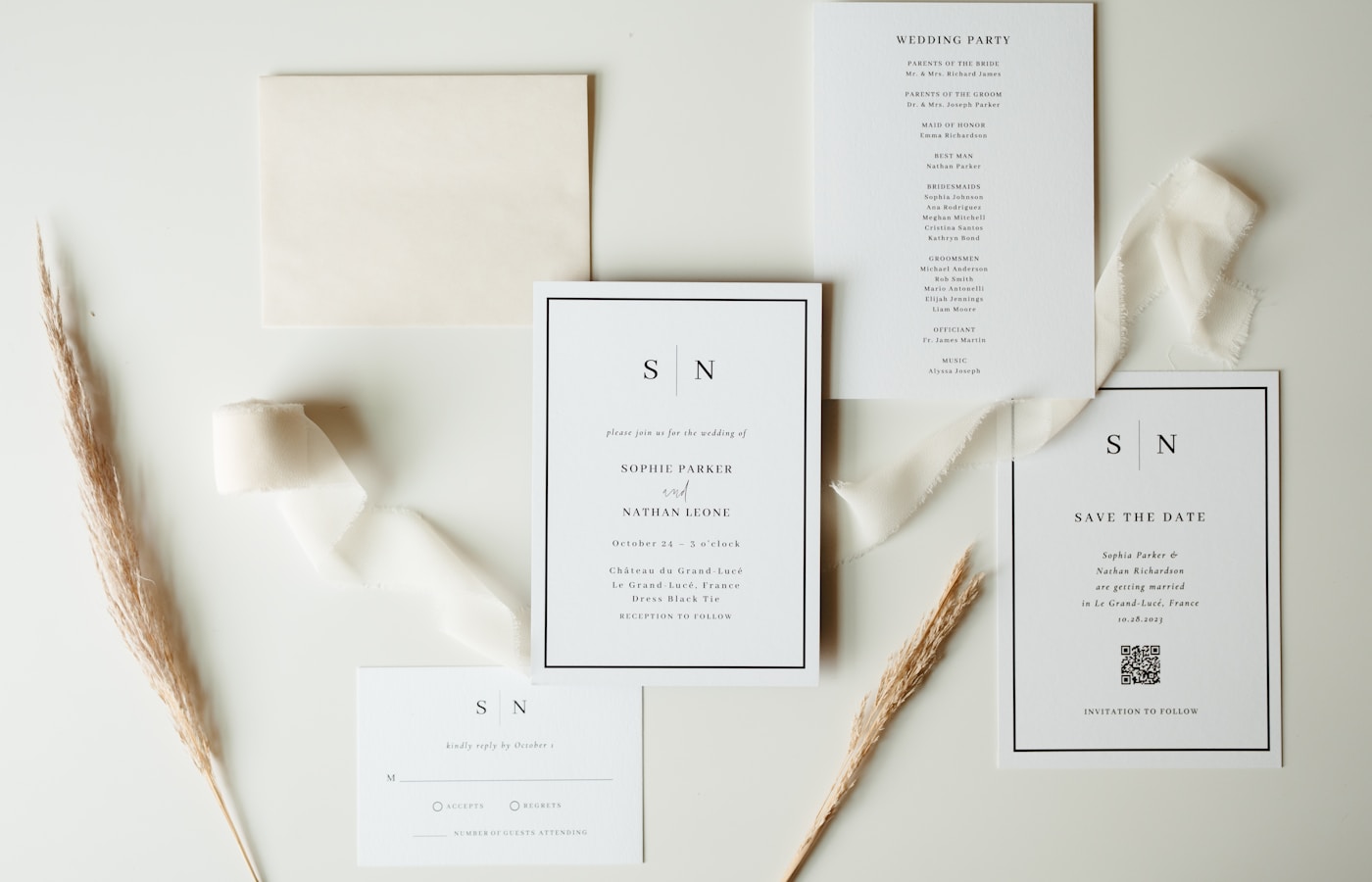
If you’re working with a calligrapher or printer, ask about a small enclosure card specifically for travel information, since most guests read a separate insert more carefully than dense text crammed onto the main card.
Sample Formal Wording
“Together with their families, [Names] request the pleasure of your company as they exchange vows in Punta Cana, Dominican Republic, on the fourteenth of March, two thousand twenty-seven, at Grand Palladium Resort. Details and travel information at [website].”
Sample Casual Wording
“We’re tying the knot in paradise! Join [Names] in Punta Cana, Dominican Republic, on March 14, 2027, at Grand Palladium Resort. Full trip details at [website]. Can’t wait to celebrate with you!”
Wording for Adults-Only or Child-Free Weddings
Many destination weddings skip kids, partly because resort ceremony spaces are small and partly because parents often appreciate a trip that doubles as a getaway. If that’s your plan, say so clearly rather than hoping guests infer it. Something like “We have arranged an adults-only celebration and hope this gives you an excuse for a well-deserved trip away” on your website or insert card handles it warmly.
Avoid addressing the envelope to “The Smith Family” if children aren’t invited, since that wording implies otherwise. Address it to the specific adults by name. It’s a small detail, but it prevents the single most common source of awkward RSVP confusion I see with destination weddings.
Wording for Multi-Day Celebrations
If your wedding weekend includes a welcome dinner, group excursion, or farewell brunch, your main invitation still shouldn’t try to cover it all. List just the ceremony details on the invitation itself, then use your wedding website or a printed itinerary insert to lay out the full weekend schedule. Guests appreciate seeing the whole picture, but they want to find it in one organized place rather than pieced together from the invitation wording.
A simple line like “Join us for a weekend of celebration – full itinerary at [website]” on the invitation points guests where to look without cluttering the card itself.
Common Wording Questions
Do we need to mention travel logistics on the invitation? No. Save flight suggestions, hotel codes, and transportation info for your wedding website or a separate insert. It keeps the main card elegant instead of cluttered, and it means you can update travel details later without reprinting anything.
Should we include gift registry details? Skip it. Guests already spend real money getting to you. Adding registry information on the invitation itself reads as presumptuous. Let your website carry that information if you choose to include it at all, tucked into a section guests only find if they’re looking for it.
What about plus-ones? Be direct. If a guest has a significant other, extend the invitation to include them by name. Vague wording leads to awkward RSVP conversations you don’t need during an already busy season. If plus-ones aren’t offered across the board, keep that consistent so nobody feels singled out.
Should the tone match the destination? It can. A beach wedding invitation can lean playful and warm. A cathedral ceremony in a European city might call for something more formal. Match the wording to the feeling you want guests to have when they open the envelope, and let that same tone carry through to your save the dates and website.
How formal should the RSVP wording be? Match it to your invitation style. A formal card might read “The favor of a reply is requested by [date],” while a casual one can simply say “Let us know by [date] so we can finalize headcounts.” Either way, give a firm deadline, since destination weddings need accurate numbers earlier than hometown ones for room blocks and catering.
Digital Invitations and Wedding Websites
Most couples now pair a printed invitation with a wedding website that carries the heavier logistical load, flight suggestions, hotel booking codes, packing tips, and a day-by-day itinerary. Keep your website link short and easy to type by hand, since some guests will be copying it from a physical card rather than clicking a digital one.
If budget or timeline pushes you toward fully digital invitations, the same wording rules apply. Keep the core announcement clean and push logistics to a linked page. Digital invitations also make last-minute updates easier if a venue detail changes, which happens more often with destination weddings than people expect.
Wording Mistakes I See Most Often
The biggest one is cramming too much onto the main card. I’ve seen invitations that list flight numbers, hotel codes, and a packing list all in the same block of text as the ceremony announcement. It buries the actual news, that two people are getting married, under logistics nobody needs at that exact moment. If it feels crowded when you read it out loud, it’s crowded.
The second mistake is inconsistent formality. An invitation that opens formally, “Together with their families…”, then closes with a casual line about “shots on the beach after” reads like two different people wrote it. Pick a tone early and carry it through every piece, the save the date, the invitation, the website, and any insert cards.
The third is leaving the RSVP method unclear. Destination weddings often use a website RSVP instead of a mailed card, but if that’s not explained plainly, older guests especially may not realize how they’re supposed to respond. Spell it out: “Please RSVP at [website] by [date]” removes any guesswork.
Working With a Calligrapher or Stationer
If you’re hiring someone to design and print your invitations, bring your wording drafts to that first conversation rather than starting from a blank page together. Stationers can suggest formatting that fits destination-specific details naturally, like working a small map illustration or a passport-stamp motif into the design, but they can’t read your mind about tone or what you want emphasized.
Ask to see a proof with your actual wording before anything goes to print. Names, dates, and resort spellings are the most common error points, and a proof catches those mistakes while they’re still free to fix.
Pair Your Invitations With Clear Guest Communication
Wording is only half the job. Guests will still have travel questions your invitation can’t answer alone. Our complete guide to destination wedding guest travel covers flights, hotel blocks, and packing advice you can link to directly from your wedding website.
And if you’re still in the early planning stages and feeling buried in decisions, start with our post on how to start planning a destination wedding without feeling overwhelmed. Invitation wording gets a lot easier once the bigger decisions are locked in.
Need a Hand With the Wording?
If you want a second opinion on your save the dates or formal invitations before you send them, I’m happy to look them over. Reach out to Carol here and let’s check availability while we’re at it.
